Physical Address
304 North Cardinal St.
Dorchester Center, MA 02124
Physical Address
304 North Cardinal St.
Dorchester Center, MA 02124

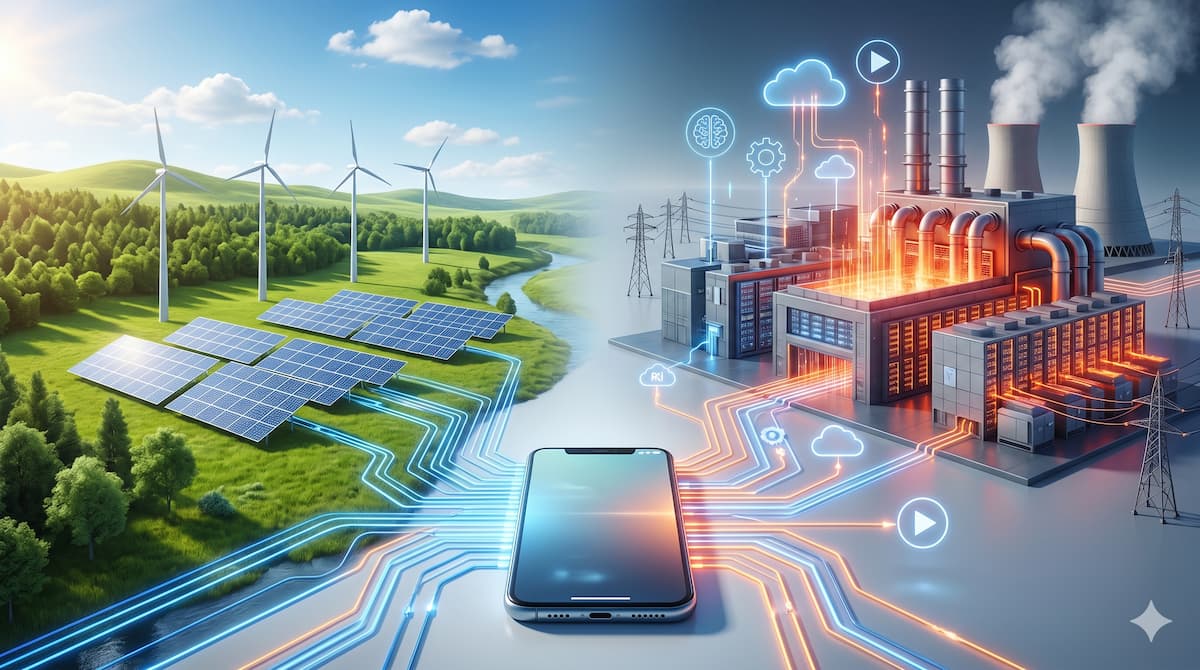
Technology has become a part of almost every moment of our lives. Most people start their day by checking their phones, scrolling through social media, replying to messages, or watching videos before even getting out of bed. Artificial intelligence is now also becoming part of daily routines, helping people write emails, edit photos, search for information, and even create content within seconds.
Because everything feels fast and simple, it is easy to forget that these digital activities require a huge amount of energy behind the scenes. A smartphone may fit in your pocket, and AI tools may look effortless to use, but the systems powering them are massive and constantly running.
Every time someone uploads a photo, streams a movie, uses cloud storage, or asks an AI chatbot a question, thousands of machines work together in the background. As billions of people use smartphones and AI services every day, the amount of electricity needed to support the digital world keeps growing rapidly.
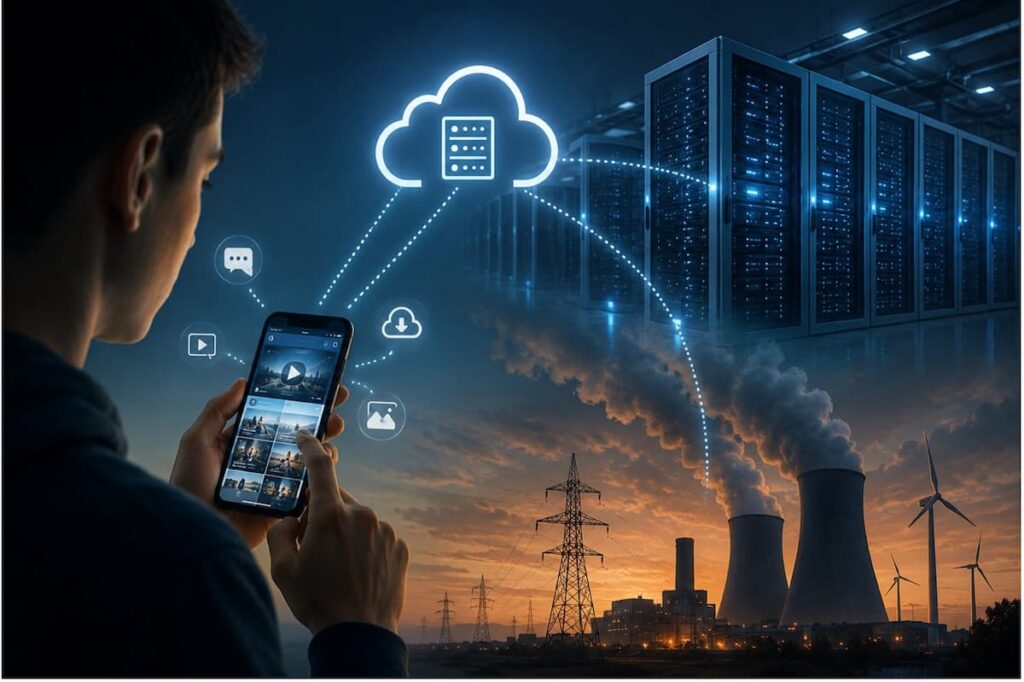
People often think of the internet as something invisible, but it actually relies on physical infrastructure spread across the world.
Whenever someone sends a message or watches a video online, the data travels through mobile networks, internet cables, cloud systems, and giant data centers filled with powerful computers. These systems never truly shut down. They continue operating every second of the day to keep websites, apps, and online services running smoothly.
Even something as simple as refreshing a social media feed requires energy from multiple systems working together in the background.
As internet usage grows worldwide, the energy needed to keep everything connected also continues increasing.
The Fix Mission is currently run by me personally. With 5 years of experience in phone repair, buying, and selling, I offer free advice before you buy a used phone, sell your current device, or pay for a repair. My goal is simple: help you make a safer decision before spending money.
Get Free Advice →The Fix Mission is currently run by me personally. With 5 years of experience in phone repair, buying, and selling, I offer free advice before you buy a used phone, sell your current device, or pay for a repair. My goal is simple: help you make a safer decision before spending money.
Get Free Advice →Artificial intelligence has introduced a completely different level of energy consumption.
Unlike normal apps, AI systems process huge amounts of information at very high speeds. Whether someone is generating images, asking questions, translating languages, or editing videos with AI tools, powerful computers are handling complex calculations almost instantly.
These systems require advanced processors that consume much more electricity than regular servers. Training AI models takes even more energy because developers run enormous amounts of data through machines for long periods before the AI becomes available to the public.
As more companies add AI features to their services, the demand for computing power keeps rising around the world.

Modern smartphones do much more than make calls or send texts. They stay connected to the internet almost constantly, even when users are not actively using them.
Many processes continue running quietly in the background, including:
Because phones communicate with remote servers throughout the day, they contribute to continuous digital energy use.
The Fix Mission is currently run by me personally. With 5 years of experience in phone repair, buying, and selling, I offer free advice before you buy a used phone, sell your current device, or pay for a repair. My goal is simple: help you make a safer decision before spending money.
Get Free Advice →People also spend far more time on their phones than they did a few years ago. Hours of scrolling, streaming, gaming, and browsing may feel harmless individually, but together they create enormous pressure on digital infrastructure worldwide.
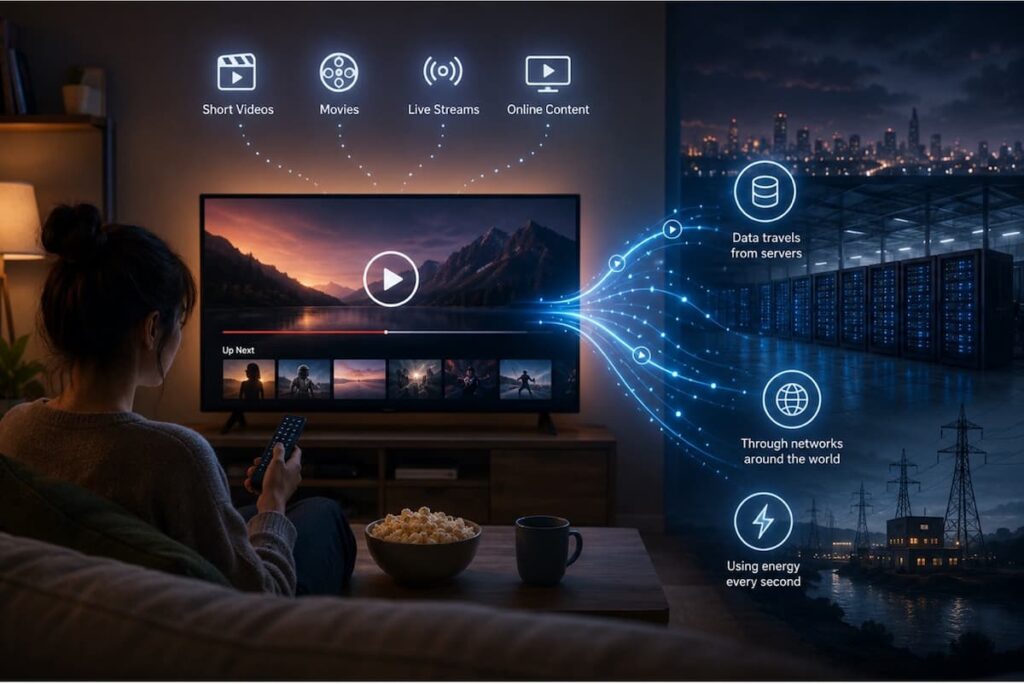
Streaming platforms have become one of the biggest parts of internet culture. Millions of people spend hours daily watching short videos, movies, live streams, and online content.
High-quality streaming requires huge amounts of data to move constantly between servers and devices. Features like autoplay and endless recommendations keep users online longer, increasing energy use even further.
Many people leave videos playing in the background without realizing those streams are still consuming electricity through networks and server systems somewhere else in the world.
The more online entertainment grows, the more power is needed to support it.
Years ago, most files stayed on personal computers or storage drives. Today, photos, documents, videos, and app data are mostly stored online.
Cloud storage makes life convenient because people can access files from anywhere, but it also means information is constantly moving between devices and remote servers.
Automatic backups, shared folders, and synced apps may seem small individually, yet billions of these actions happen every day. This creates continuous demand for large-scale data centers that require electricity nonstop.
Most users never see these systems directly, which is why the environmental impact often goes unnoticed.

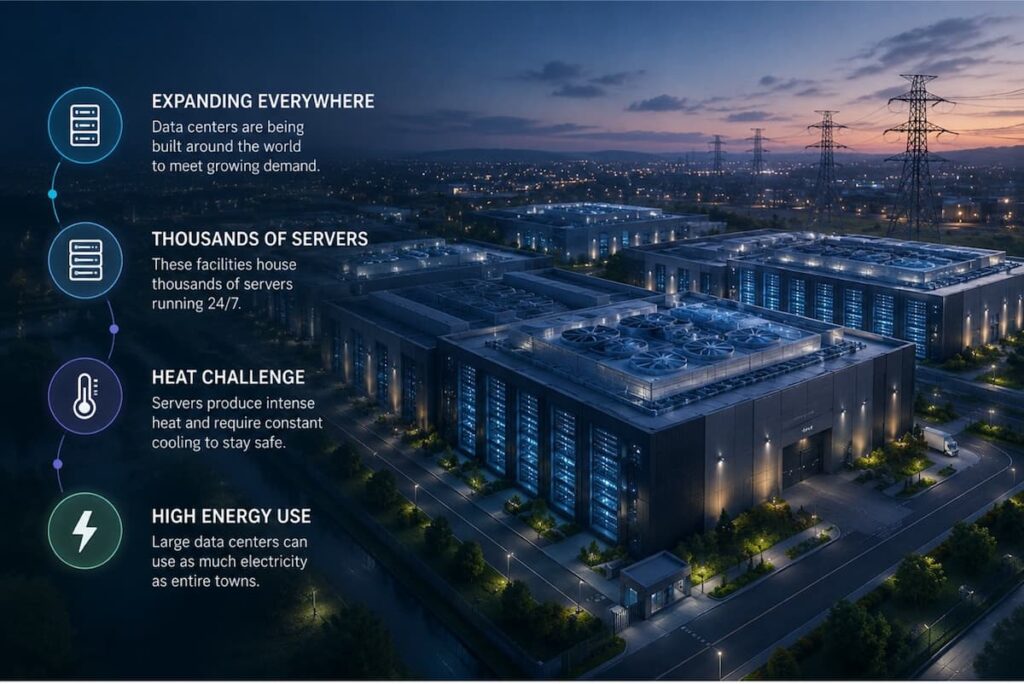
The growing use of AI and smartphones has led to the rapid expansion of data centers across the world.
These facilities contain thousands of servers working continuously to support online services. Some are so large that they use as much electricity as entire towns.
One major challenge inside these centers is heat. Servers generate huge amounts of heat while processing information, so cooling systems must operate all the time to prevent overheating.
As digital demand increases, companies continue building bigger facilities with more computing power, which also increases global energy consumption.
The Fix Mission is currently run by me personally. With 5 years of experience in phone repair, buying, and selling, I offer free advice before you buy a used phone, sell your current device, or pay for a repair. My goal is simple: help you make a safer decision before spending money.
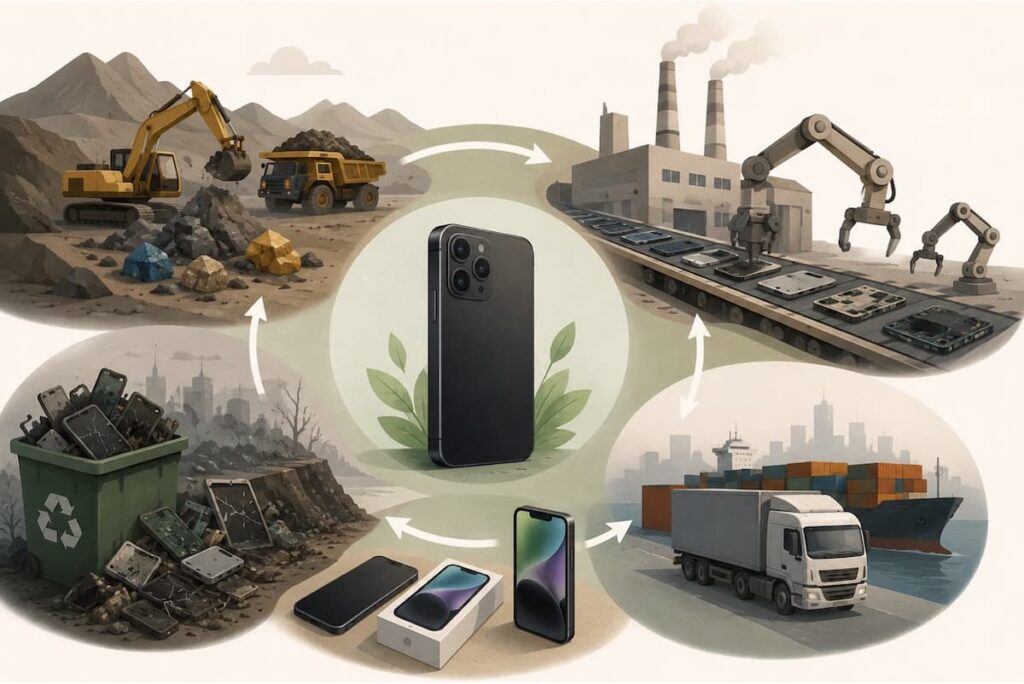
Get Free Advice →The environmental impact of smartphones starts long before people buy them.
Manufacturing phones requires factories, industrial machinery, transportation systems, and mining operations. Producing batteries, processors, screens, and cameras consumes large amounts of energy and natural resources.
Materials such as lithium and cobalt must be extracted from the earth, often through energy-intensive mining processes.
Because many people replace their phones every few years, manufacturers constantly produce new devices. Frequent upgrades increase electronic waste and create even greater pressure on the environment.
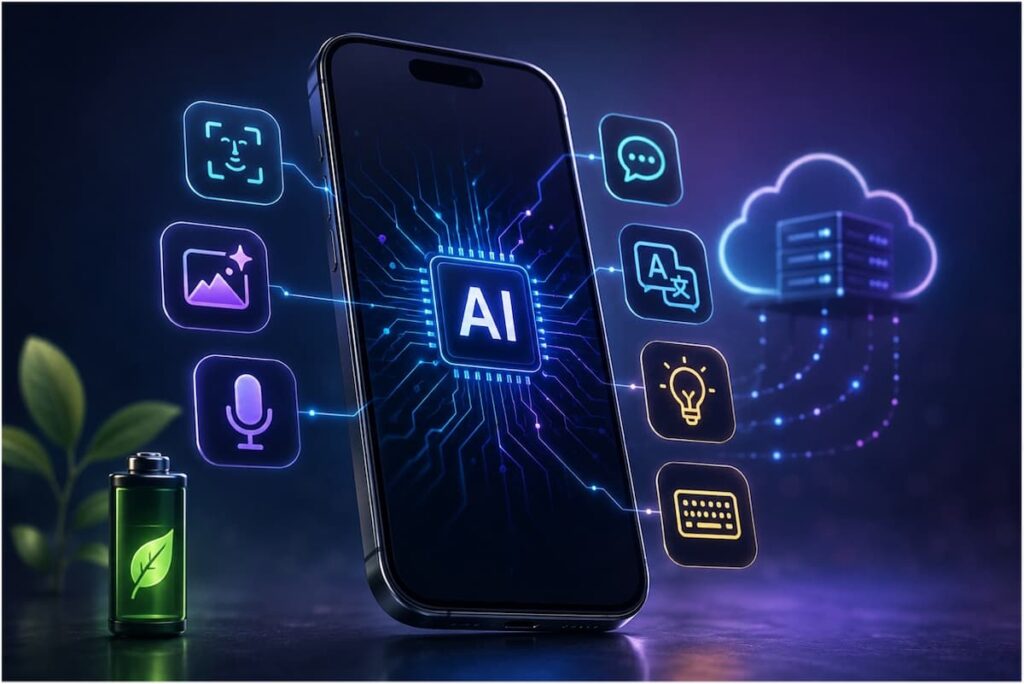
Smartphones today include many AI-powered features that make devices smarter and more convenient.
Functions like:
all rely on advanced processing systems.
Some of this work happens directly on the phone, while some depends on remote cloud servers. Either way, these features increase the amount of electricity required to support modern devices.
As companies compete to introduce more AI tools, smartphones continue becoming more demanding in terms of power and processing.
Read Also: The Hidden Environmental Cost of Smartphones and Why Repairing Them Matters
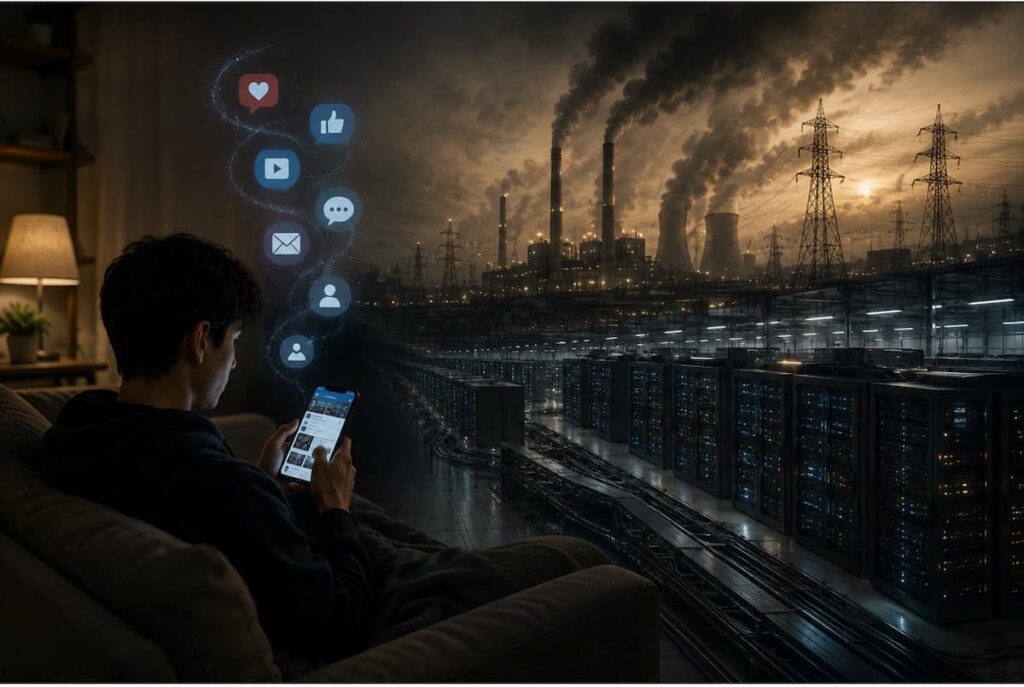
One reason digital energy consumption keeps growing is because it feels invisible.
People can see pollution from factories or smoke from vehicles, but they cannot see the electricity being used when scrolling social media or generating AI content.
Because online activities happen quietly in the background, many users assume they have little environmental impact. In reality, billions of digital actions every day require massive amounts of electricity, cooling systems, and hardware infrastructure.
The convenience of modern technology comes with environmental costs that are often hidden from everyday life.
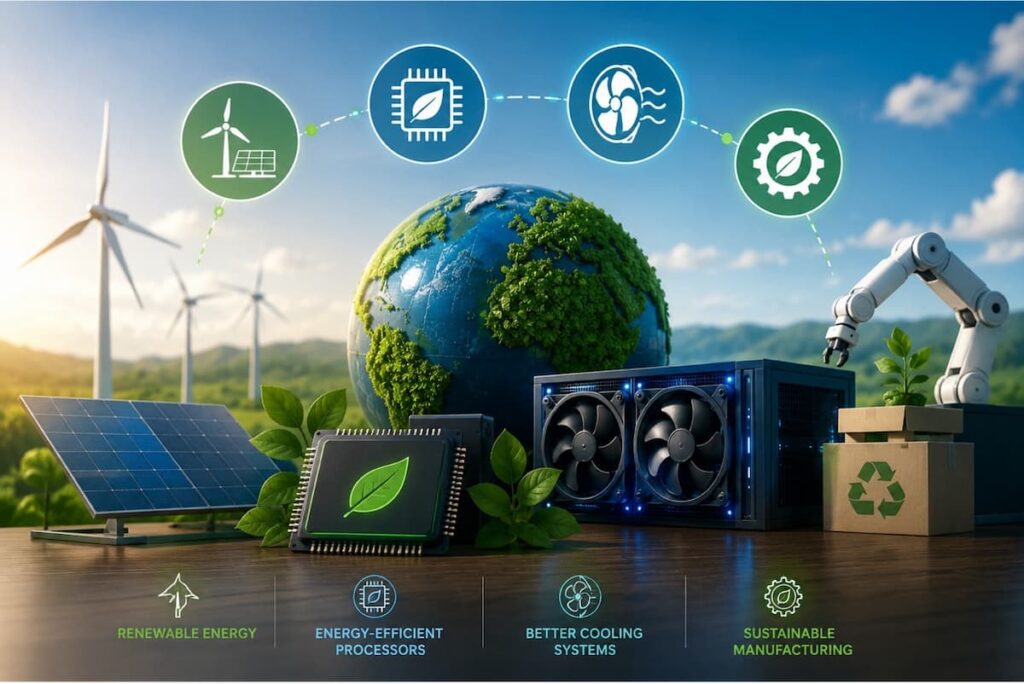
Many technology companies are now trying to reduce the environmental impact of digital systems.
Some are investing in renewable energy, energy-efficient processors, better cooling systems, and more sustainable manufacturing methods. There is also growing interest in creating AI systems that use less computing power while still performing effectively.
Although these improvements may help, digital demand continues growing at a very fast pace, which makes the challenge more difficult.
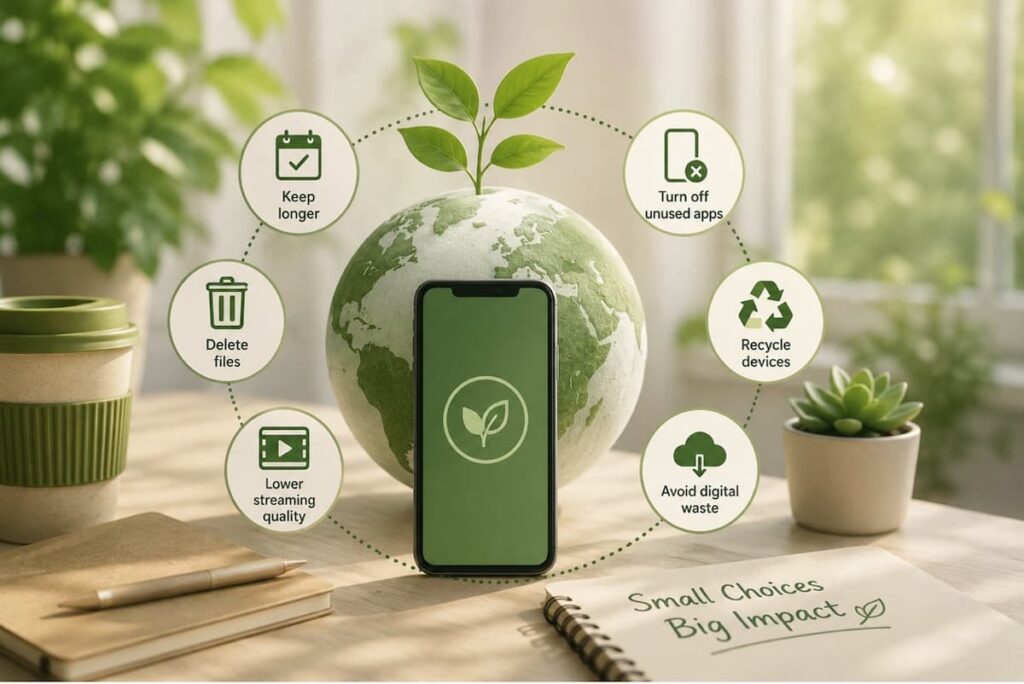
Individual users may not control large technology companies, but small everyday choices can still help reduce unnecessary energy use.
People can:
When millions of people adopt better habits, even small actions can have a meaningful impact over time.
Artificial intelligence and smartphones have changed the way people live, work, and communicate. They make daily life faster and more convenient, but they also require enormous amounts of energy behind the scenes.
Every online search, streamed video, cloud backup, and AI-generated response depends on powerful systems running nonstop across the world.
Technology may feel clean and invisible, yet the infrastructure supporting it consumes electricity on a massive scale. As society becomes more dependent on digital tools, finding a balance between innovation and sustainability will become increasingly important.
The future of technology will depend not only on creating smarter devices, but also on using energy more responsibly in a world that is becoming more connected every day.
Need help before buying, selling, or repairing a phone? Visit the Free Advice page and send me your question.
AI needs powerful computers to process huge amounts of data quickly.
Phones constantly connect to apps, cloud storage, and online services.
They are large facilities that store and process internet and AI data.
Yes, streaming requires servers and networks running nonstop.
Keep phones longer, reduce streaming quality, and recycle devices properly.





Very insightful!
A good read.
Good job! Very interesting
Very informative